
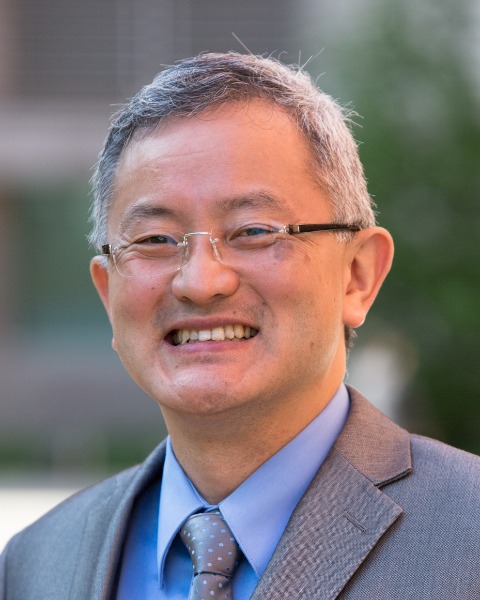
Professor
University of California, San Francisco
Hideho Okada, MD, PhD
Professor of Neurosurgery, University of California, San Francisco
Member, Parker Institute for Cancer Immunotherapy
Dr. Hideho Okada is a physician-scientist with over 30 years of experience pioneering translational research in brain tumor immunotherapy. His deep understanding of both clinical and laboratory science has led to significant advances in the treatment of gliomas, particularly through the development of innovative immunotherapy strategies. Over his career, Dr. Okada has directly contributed to the development of 10 investigational new drug (IND) applications, all of which were successfully approved by the FDA for early-phase clinical trials. These include genetically engineered glioma vaccines, T cell receptor (TCR)- and chimeric antigen receptor (CAR)-transduced T cell therapies for both adult and pediatric patients.
One of Dr. Okada’s groundbreaking contributions is the discovery of cytotoxic T lymphocyte (CTL) epitopes in glioma-associated antigens, which laid the foundation for targeting gliomas with immunotherapy. His work also highlighted the roles of key immune players, including the VLA-4 integrin receptor, CXCL10 chemokine, and intratumoral dendritic cells, in shaping immune responses within the glioma microenvironment. These discoveries have informed the development of several novel immunotherapeutic strategies. Dr. Okada’s team has also been at the forefront of creating synNotch-primed CAR T-cells, which aim to overcome major challenges like antigen heterogeneity, off-tumor toxicity, and T-cell exhaustion.
As an innovator in the field, Dr. Okada has led the first-in-human phase I clinical trial of synNotch-primed CAR T-cells in patients with glioblastoma. This trial represents a significant step forward in the potential of engineered T-cell therapies to target complex, resistant tumors. Dr. Okada has also advanced the understanding of immunoregulatory mechanisms in gliomas, particularly those mediated by myeloid-derived suppressor cells (MDSC) and mutations in isocitrate dehydrogenase (IDH1/IDH2).
Dr. Okada has made significant contributions to improving the evaluation of immunotherapy response in brain tumor patients. As a leading expert in neuro-oncology, he spearheaded the development of the Immunotherapy Response Assessment in Neuro-Oncology (iRANO) criteria, which now serves as a global standard for assessing radiologic responses in patients undergoing immunotherapy.
His work has not only advanced the development of novel treatments but has also established new methodologies for evaluating and improving patient outcomes. Dr. Okada’s innovative approach and translational vision have earned him recognition as an elected member of the American Society for Clinical Investigation and a pivotal role in the editorial leadership of Neuro-Oncology, one of the foremost journals in the field.
Dr. Okada’s career exemplifies the fusion of scientific discovery with clinical application. His unique ability to translate fundamental immunology insights into clinical therapies positions him to bring valuable perspectives and overlooked insights into the future of cancer research, particularly in the challenging domain of glioma treatment. His deep commitment to overcoming the barriers of cancer immunotherapy ensures his continued role as a leader in advancing translational research for patients.
Disclosure(s): Cellula Therapeutics: Advisor (Ongoing), Consultant (Ongoing); iX Gene: Advisor (Ongoing), Consultant (Ongoing)
Cells, Vaccines and Viruses Debate: CAR-T
Saturday, May 2, 2026
4:18 PM - 4:25 PM CT