
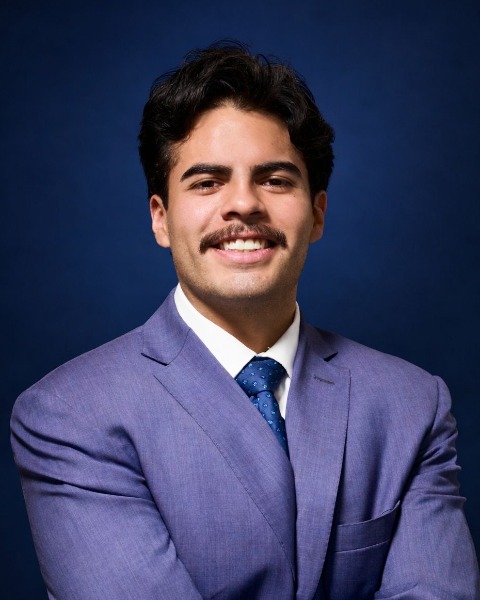
Medical Student
Anahuac University
As a medical student at Universidad Anahuac México, I have intentionally pursued a research-oriented trajectory that integrates my own personal outcomes based on neuroscience, neuro-oncology, and neurosurgery. While I am still early in my research training, I really like being involved in new projects and developing my personal ideas.
I began my research career at the National Institute of Geriatrics, where I participated in projects focused on frailty in older adults as a prompt. Through this experience, I was first introduced to clinical research methods, including data collection, literature review, and critical appraisal of evidence. During this time, I developed a strong foundation in evidence-based medicine and became motivated to explore more complex and specialized fields.
I became increasingly drawn to my personal outcome previously mentioned, fields that demand both clinical precision and scientific innovation. I joined the Department of Neuro-Oncological Surgery at the National Institute of Neurology and Neurosurgery, where I worked as a research assistant under the mentorship of Dr. Sergio Moreno and Dr. Daniel Ballesteros. In this role, I contributed to projects involving radiosurgery. I was also involved in clinical practice by participating in the evaluation of patients from initial consultations through surgery. I actively participated in clinical research and multidisciplinary collaborations, gaining experience in study design.
I developed the ability to initiate research based on my own ideas under their supervision. I began working on systematic reviews and meta-analyses and have contributed to multiple presentations at international conferences, including CMCN, CNS, and AANS.
Alongside my academic research, I have gained hands-on experience since MS-1. This experience has provided me valuable insight into the operational aspects of clinical research, including protocol adherence and regulatory requirements. It has also reinforced the importance of data integrity and precision in generating reliable clinical evidence and reinforced my commitment to further developing my training.
I have been deeply committed to academic leadership and education in the area. I have developed and taught courses in research methodology and applied statistics for health sciences students and have mentored peers in scientific writing and project development. Additionally, I have taken on leadership roles by organizing academic events, including founding a research-focused congress and coordinating multidisciplinary seminars. These experiences have strengthened my ability to lead collaborative projects and foster a culture of inquiry among students.
My research interests are primarily centered on neuro-oncology, with a focus on improving patient outcomes through innovative and translational approaches, particularly those that enhance quality of life. As a secondary interest, I am drawn to the application of new technologies such as artificial intelligence, genomic data, and advanced neurosurgical techniques, as it gives me hope to contribute meaningfully as a future neurosurgeon.
I am especially motivated to work in collaborative, high-academic environments where clinical practice and research are closely integrated. My ultimate goal is to build a career that combines my personal values with excellence as a professional in medicine, particularly in the field of neurosurgery.
Disclosure(s): No financial relationships to disclose
Sunday, May 3, 2026
5:45 PM - 6:45 PM CT